This is the third installment of our special hummingbird series with in-house hummingbird expert, Ken Assmus. If you want more fun facts, expert advice and stunning photos scroll through our recent blog posts!
The Rufous hummingbird has officially been spotted in Idaho during its northwest migration. It is the second species of hummingbirds to make an appearance in Idaho this spring.
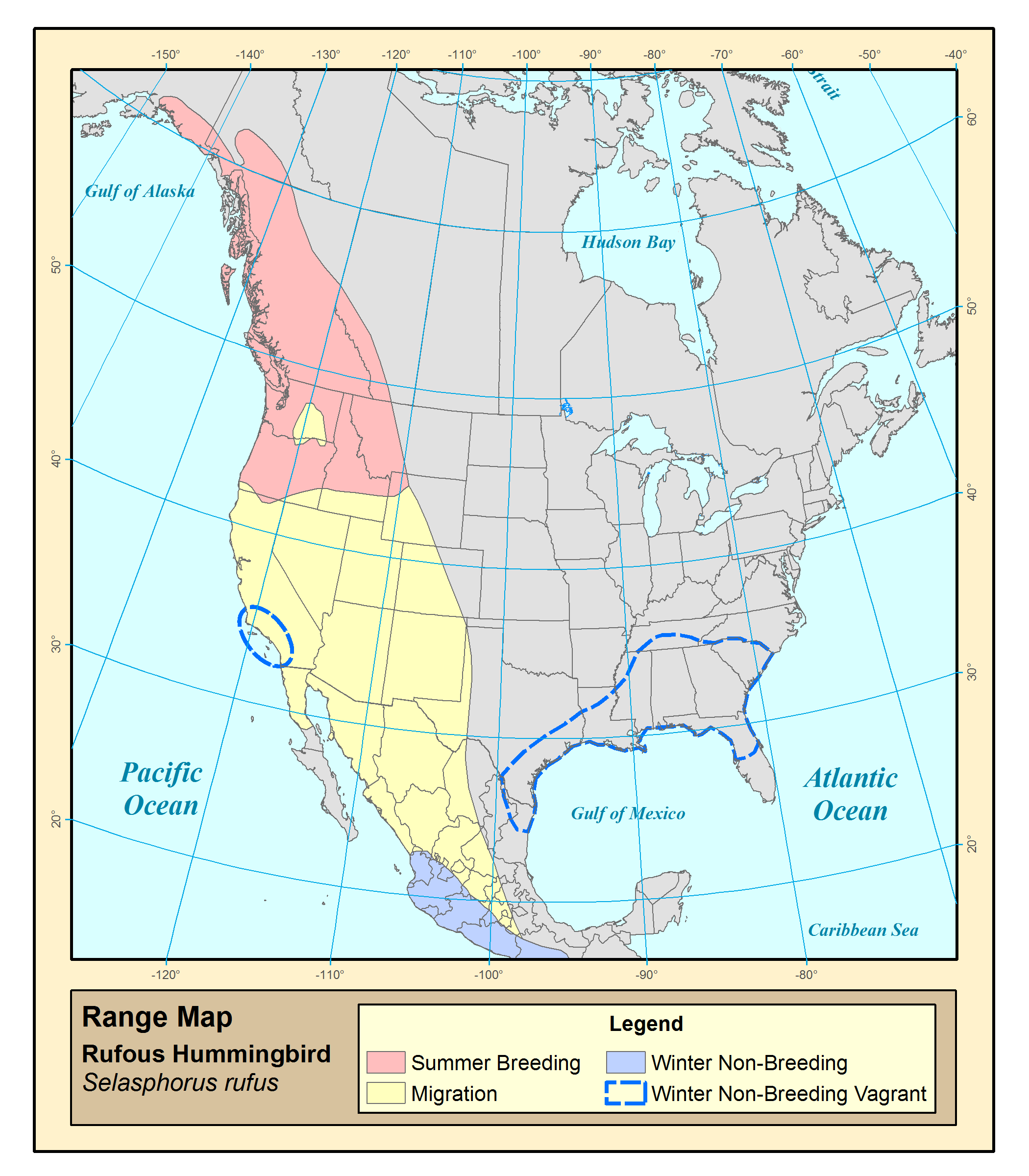
This small bird is found in more places in North America than any other hummingbird. They breed as far north as Alaska and winter in the southern reaches of Mexico and Central America, which means the Rufous has the longest migration route of all the U.S. hummingbirds. They can be found in Central America, every western state except Hawaii, and in Alberta and British Columbia, Canada.
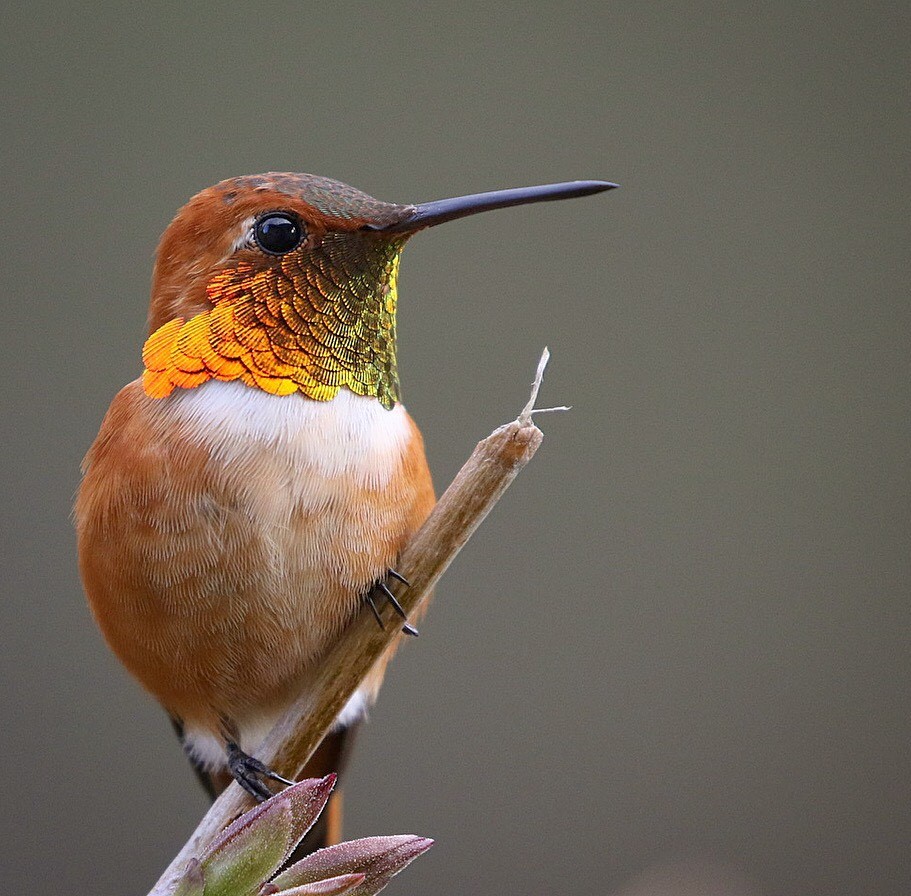
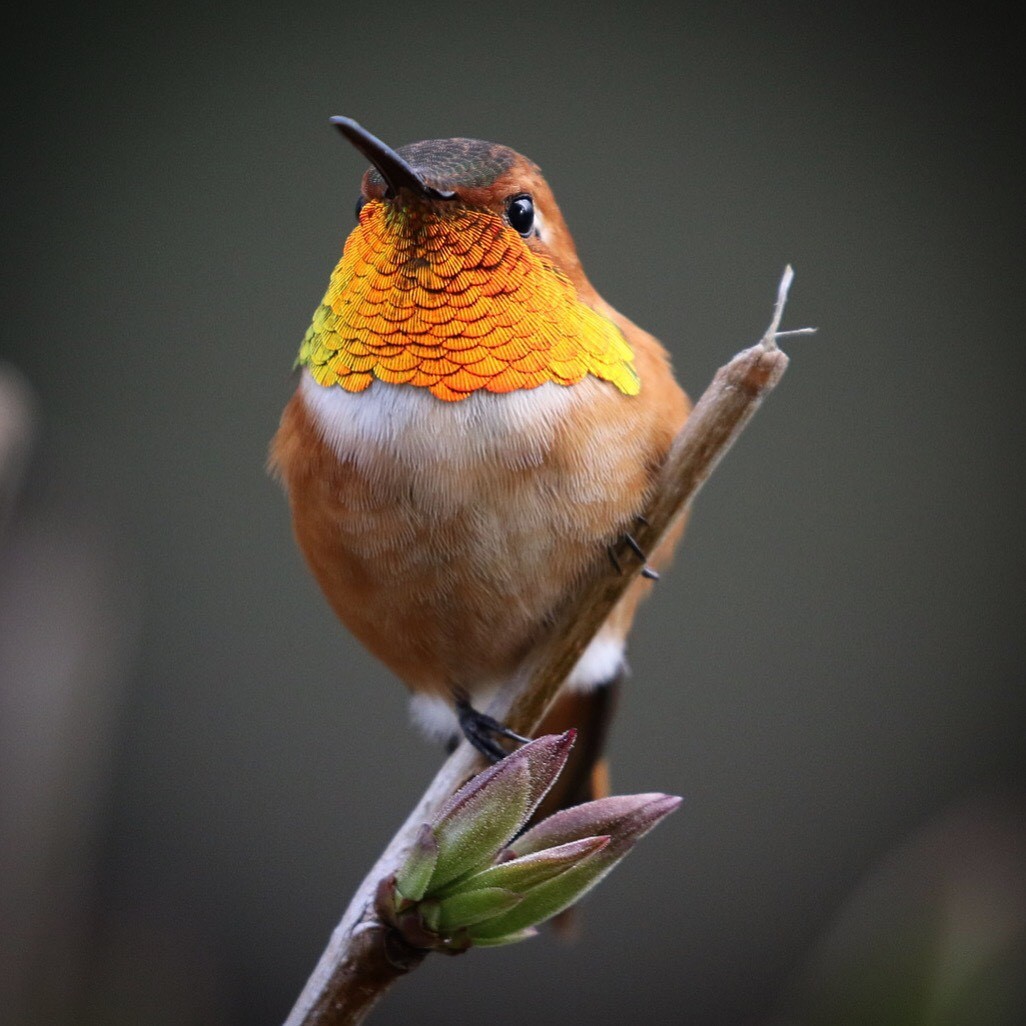
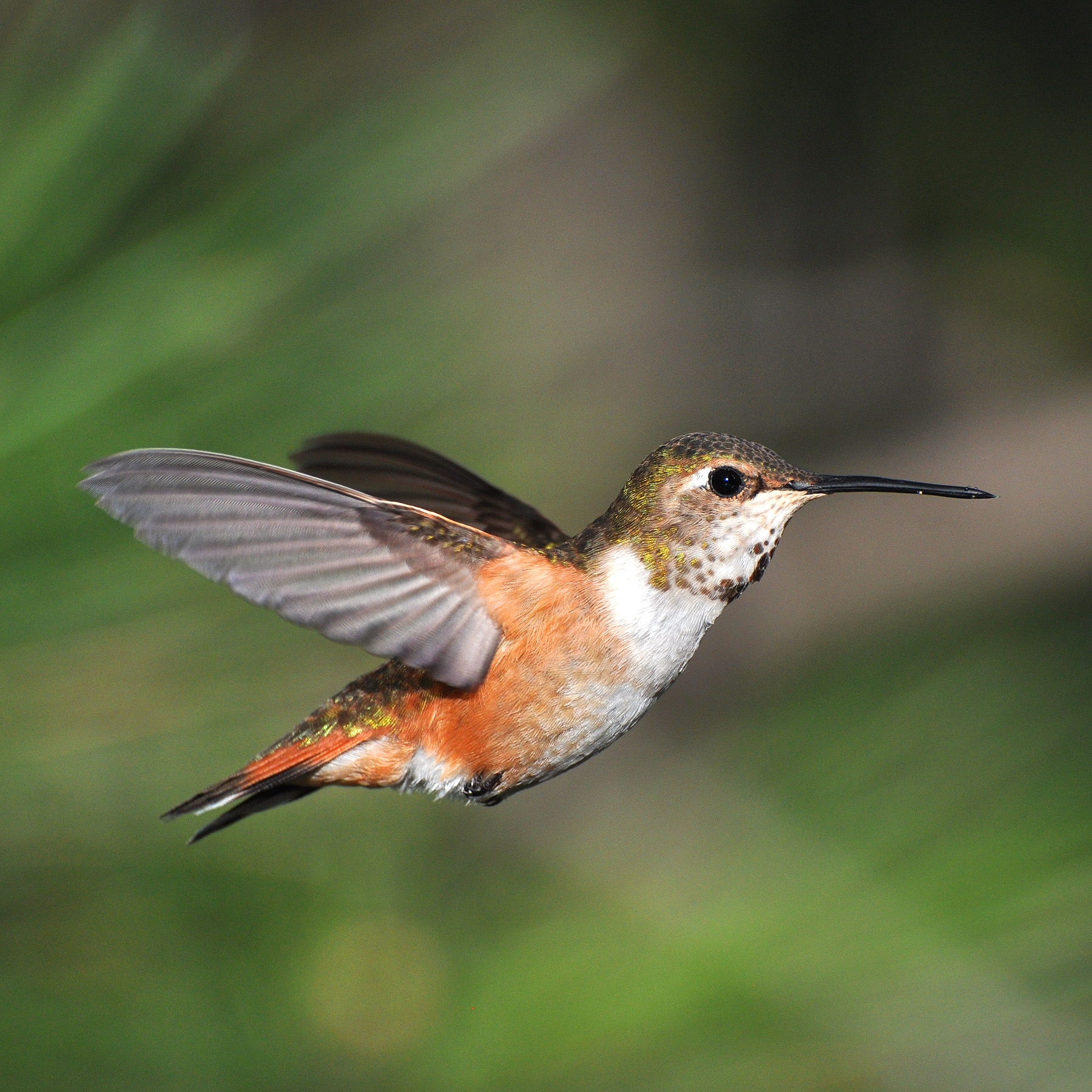
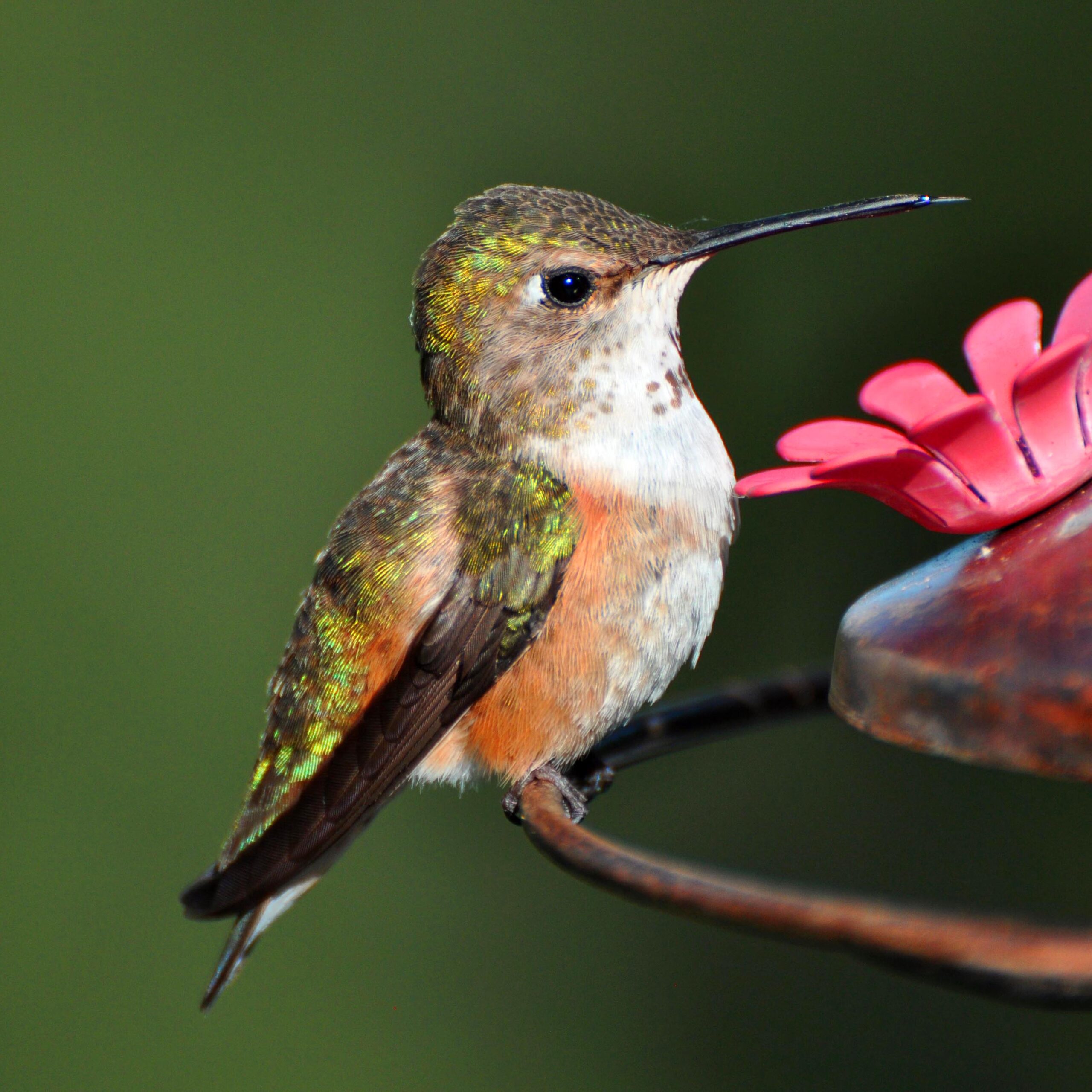
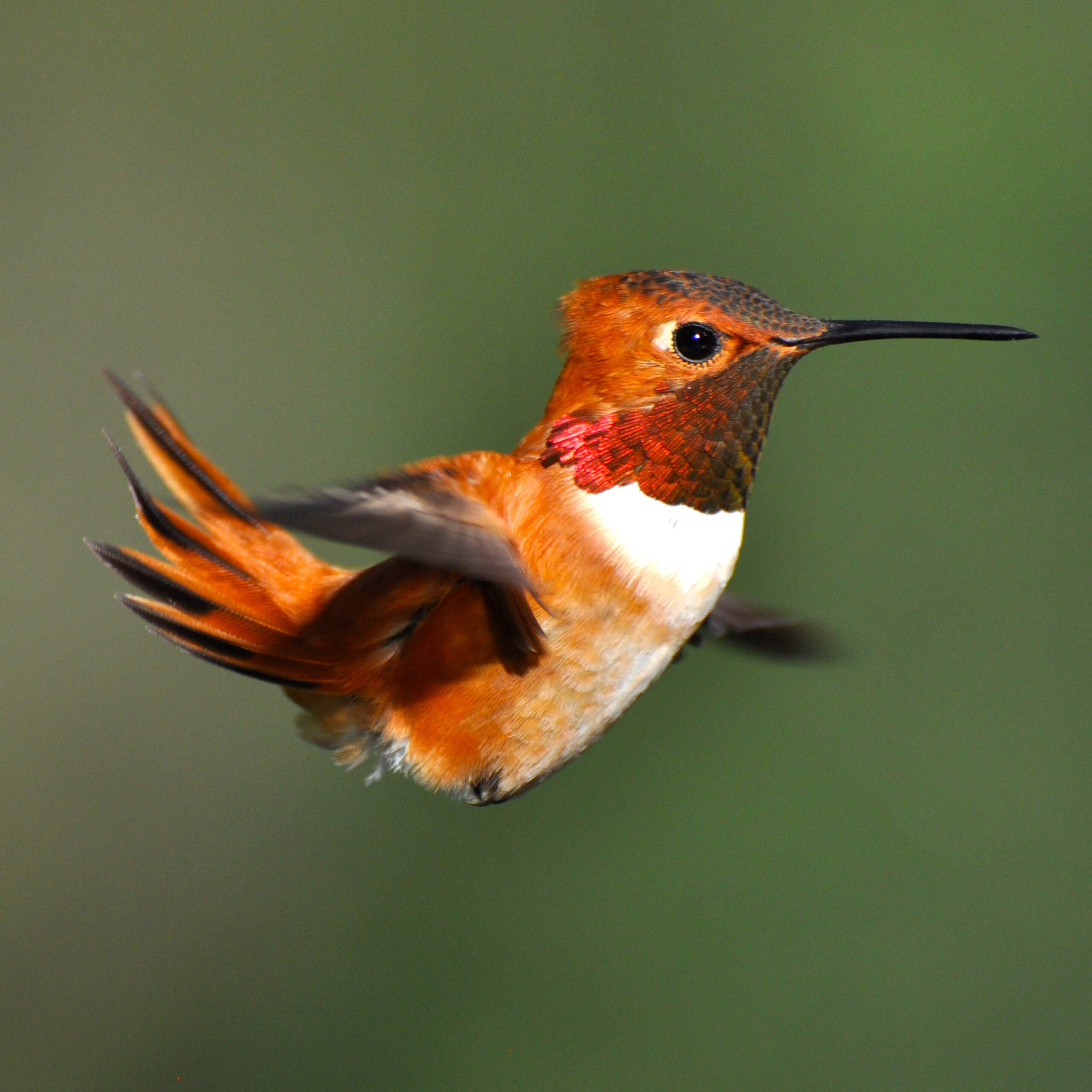
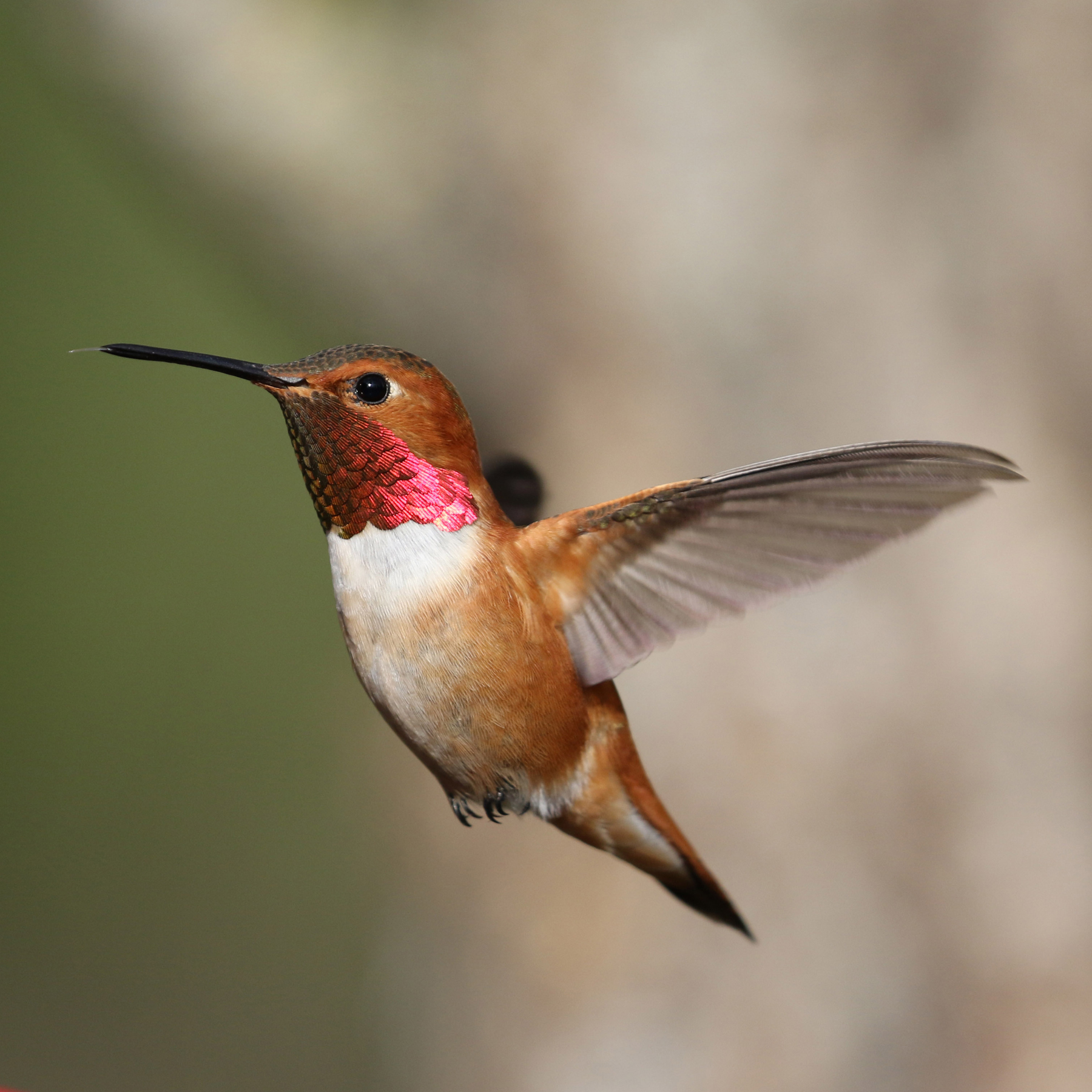
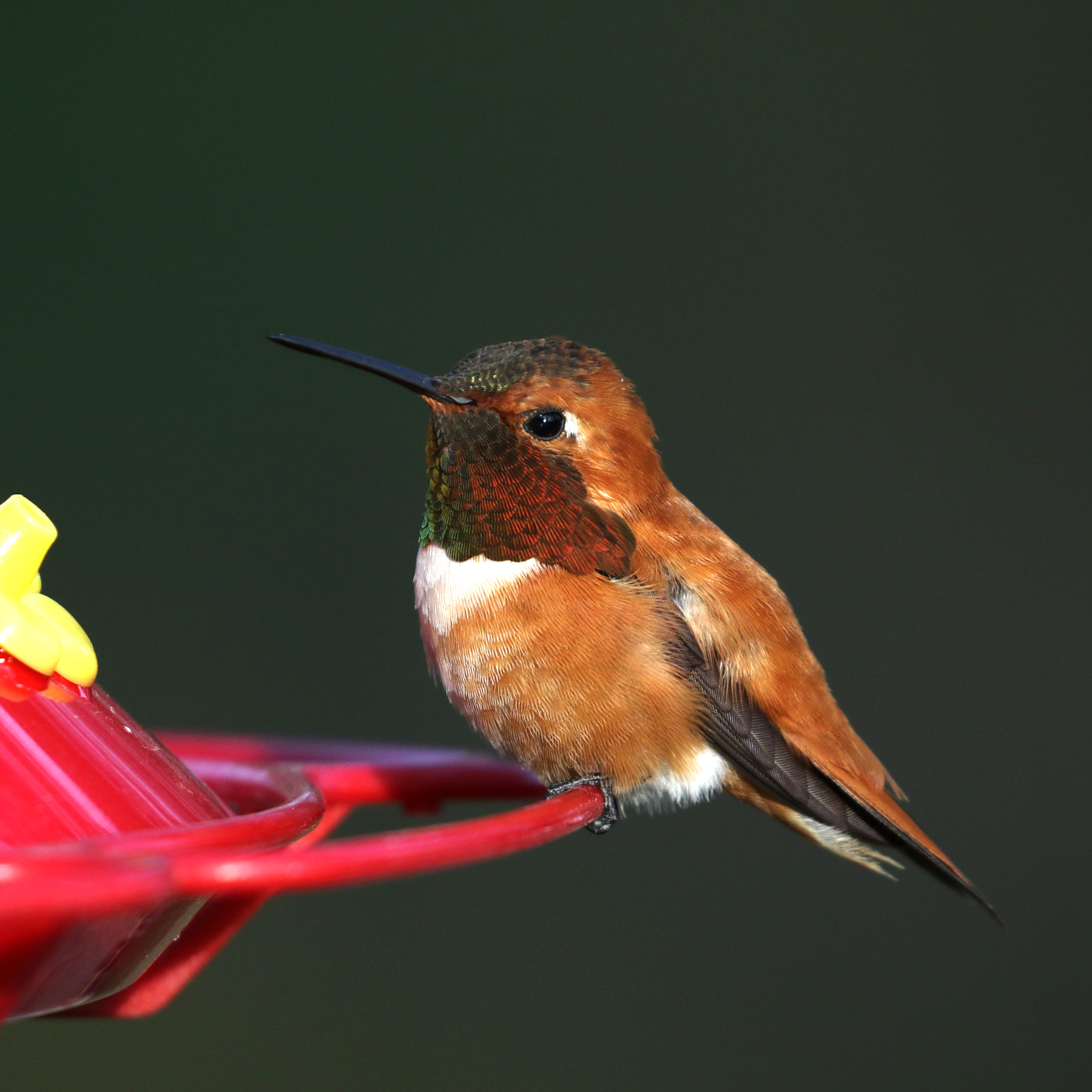
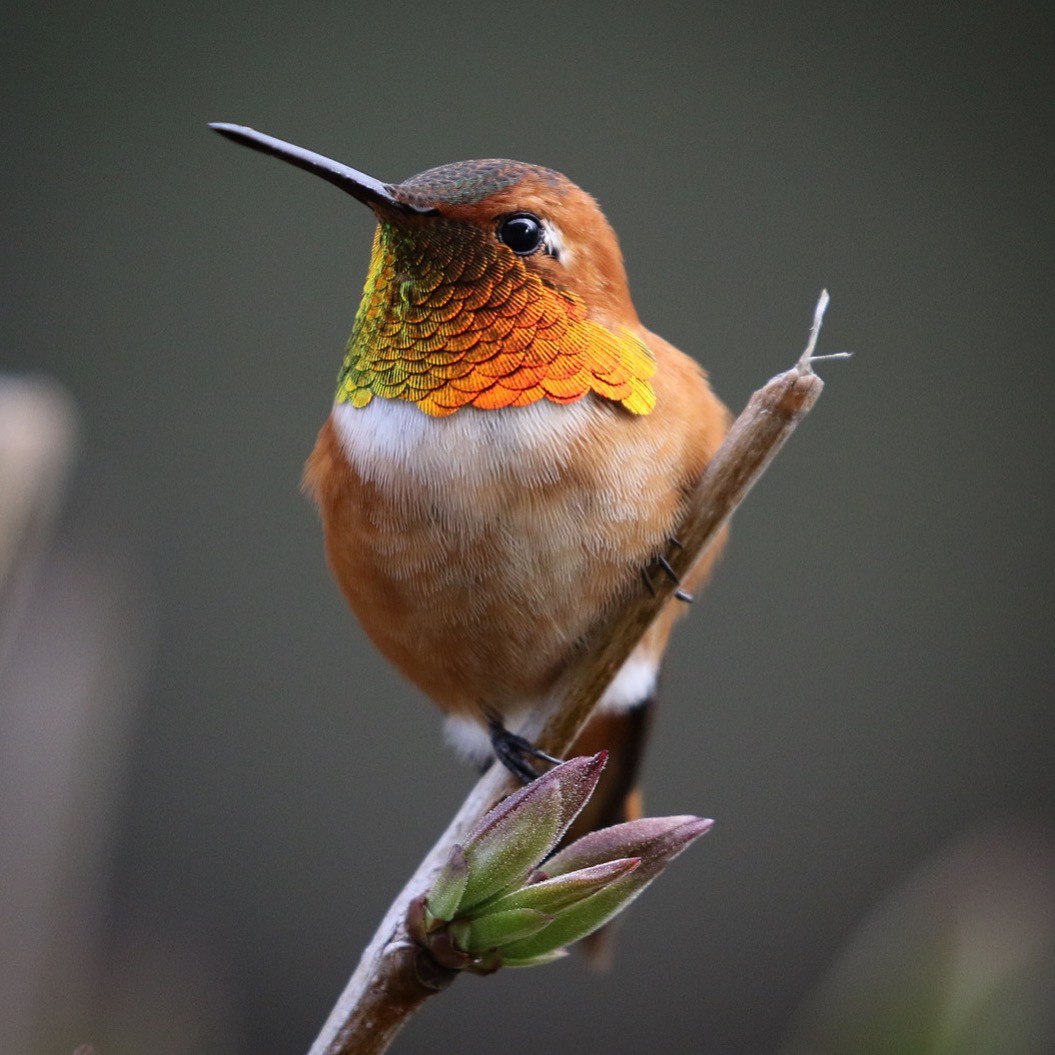
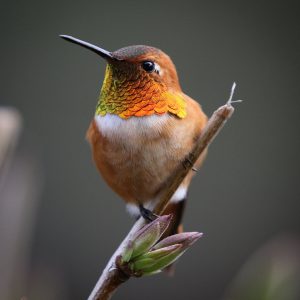
The male Rufous is copper in color, especially its crown, tail and sides. Sometimes their backs may be green and the feathers near its throat often reflect light in shades of green, orange or bright yellow. The female has a green back and crown, white breast, streaked throat, copper sides and copper tail feathers with white tips. The average weight of the male is 3.22 grams, and the female is 3.41 grams. A household paperclip weighs 1 gram. These birds are incredibly light!
As an avid bird watcher and photographer, I find the male Rufous are the most difficult to photograph of all the species that visit Idaho. Over the past 7 years of observation, the male Rufous is only around for a few days before moving on into Canada or Alaska. The window of opportunity is very short, so when I see one the hunt is on to capture a good image. This year, I’m excited to share with you my photos of a very close encounter with you.
Read my recent post on the Calliope Hummingbird.
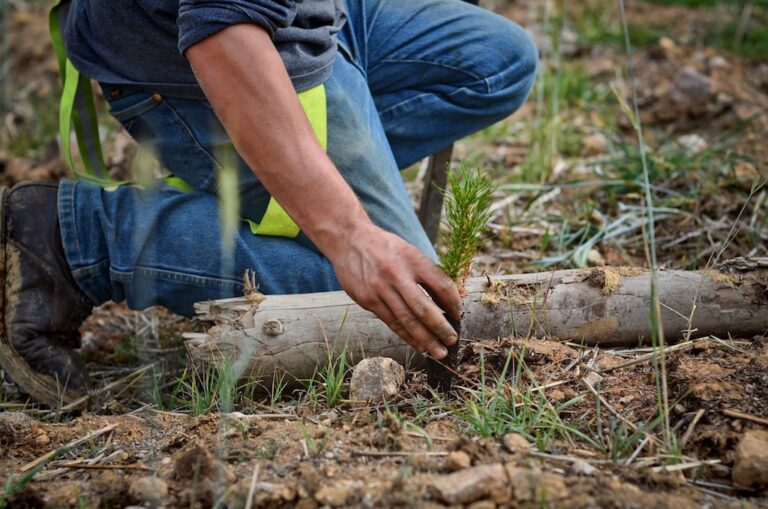
Someone recently asked us why we plant Lodgepole Pine at the site instead of Ponderosa Pine. Here is the exact question: “Why would you plant Lodgepole Pine instead of Ponderosa Pine? Lodgepole Pine require fire to regenerate as their cones only open at 120°, and Ponderosa cones open when they dry out at room temperature.” …
The reading programs at Cascade Elementary School are going to the dogs. And in this case, it is a very good thing for students. To encourage young students and help make reading fun, the elementary school developed the Puppy Pound Program. In the program, first grade students have the ability to adopt a stuffed animal…
Midas Gold Idaho wants to keep the community informed about the work we are doing at the Stibnite Gold Project site. The Ask Midas blog series gives the experts in our company a chance to answer some of the community’s most frequently asked questions and help clear up any misconceptions around the project. The history…
We are continuing our efforts to restore the site in the historic Stibnite-Yellow Pine Mining District. Our team worked to remove nine tons of metal trash from private land along the county road between Sugar Creek and Hennessy Creek. We cleared out old automobile frames, empty barrels and lids, scraps of corrugated metal roofing and other debris left…
A recent article published by the AP around our project did not include all the facts on an aspect of the permitting process and only told one side of the narrative. We want to make sure Idahoans have the full story. Here is what you need to know. Midas Gold is working through the permitting…
Midas Gold has actively been part of the fabric of Idaho for more than a decade. During this time, we’ve supported our community, invested in helping the environment and held ourselves to the highest safety standards. We are proud of what we’ve accomplished and we want to share some of those highlights with you. See…

 third installment of our special hummingbird series with in-house hummingbird expert, Ken Assmus. If you want more fun facts, expert advice and stunning photos scroll through our recent blog posts!
The Rufous hummingbird has officially been spotted in Idaho during its northwest migration. It is the second species of hummingbirds to make an appearance in Idaho this spring.
This small bird is found in more places in North America than any other hummingbird. They breed as far north as Alaska and winter in the southern reaches of Mexico and Central America, which means the Rufous has the longest migration route of all the U.S. hummingbirds. They can be found in Central America, every western state except Hawaii, and in Alberta and British Columbia, Canada.
The male Rufous is copper in color, especially its crown, tail and sides. Sometimes their backs may be green and the feathers near its throat often reflect light in shades of green, orange or bright yellow. The female has a green back and crown, white breast, streaked throat, copper sides and copper tail feathers with white tips. The average weight of the male is 3.22 grams, and the female is 3.41 grams. A household paperclip weighs 1 gram. These birds are incredibly light!
As an avid bird watcher and photographer, I find the male Rufous are the most difficult to photograph of all the species that visit Idaho. Over the past 7 years of observation, the male Rufous is only around for a few days before moving on into Canada or Alaska. The window of opportunity is very short, so when I see one the hunt is on to capture a good image. This year, I’m excited to share with you my photos of a very close encounter with you.
Read my recent post on the Calliope Hummingbird.
third installment of our special hummingbird series with in-house hummingbird expert, Ken Assmus. If you want more fun facts, expert advice and stunning photos scroll through our recent blog posts!
The Rufous hummingbird has officially been spotted in Idaho during its northwest migration. It is the second species of hummingbirds to make an appearance in Idaho this spring.
This small bird is found in more places in North America than any other hummingbird. They breed as far north as Alaska and winter in the southern reaches of Mexico and Central America, which means the Rufous has the longest migration route of all the U.S. hummingbirds. They can be found in Central America, every western state except Hawaii, and in Alberta and British Columbia, Canada.
The male Rufous is copper in color, especially its crown, tail and sides. Sometimes their backs may be green and the feathers near its throat often reflect light in shades of green, orange or bright yellow. The female has a green back and crown, white breast, streaked throat, copper sides and copper tail feathers with white tips. The average weight of the male is 3.22 grams, and the female is 3.41 grams. A household paperclip weighs 1 gram. These birds are incredibly light!
As an avid bird watcher and photographer, I find the male Rufous are the most difficult to photograph of all the species that visit Idaho. Over the past 7 years of observation, the male Rufous is only around for a few days before moving on into Canada or Alaska. The window of opportunity is very short, so when I see one the hunt is on to capture a good image. This year, I’m excited to share with you my photos of a very close encounter with you.
Read my recent post on the Calliope Hummingbird.